Wednesday, 30 March 2022

It's Actually Easy Being Green

How important is the colour of your phone?

Important enough to influence which phone you end up buying?

Given I once drove from Auckland to Hamilton to get the car I wanted in the colour of my choice, you could easily argue I'm pretty engaged about the colour of my stuff.

While phones don't quite inhabit the same price bracket as a car (well, hopefully not anyway) they still represent a significant investment for most people so it's no surprise many consumers would be likely to shop around to get everything just right - including the colour.

Meanwhile, not every phone-maker has the resources to offer every colour of the rainbow. The wider the range of hues available, the more expensive the cost of manufacture. Luckily for Apple fans, there are enough iPhones sold to justify a pretty good selection,

And that selection just got bigger...


Over the last couple of years, green has come back into fashion with a flourish. From clothes to furniture to appliances, everyone is turning green - both literally and figuratively. Yes, the world's changing attitude towards preserving the environment is probably at least partly to blame for the increasing popularity of the more natural shades.

Apple has jumped on board with all four feet. The iPhone 13 and iPhone 13 mini are now available in Green or you can go for either the Pro or Pro Max in Alpine Green.

Before we get into a refresher course on the differences between all those phones themselves, let me try and describe the difference in the two new shades of green.

The green on the 13 and the mini is quite a dark shade of green - I'd probably describe it as Forest Green, although Apple simply calls it, Green. The glass on the back of these phones has been “precision milled” apparently - I don’t really know what that means but the result is a flawless, almost mirror-like surface that catches and reflects light quite dramatically.

Unfortunately, because it’s so shiny, it also catches a fair few fingerprints as well - not at all uncommon for most glass-backed handsets. The aluminium band around the edge of the device has a much more muted, matte finish but is also coloured green to match, as are the power and volume buttons. As a bit of a contrast, the glass covering the the camera module seems to be slightly frosted, creating a lighter green than the rest of the rear panel. On the iPhone 13 mini, this is quite prominent as although the whole phone is smaller, the camera module is the same size as its larger siblings, so proportionally you get more of that lighter green.

Meanwhile, the Alpine Green on the 13 Pro and 13 Pro Max is a different story altogether. In fact, it’s almost a completely opposite scenario; the majority of the rear panel seems frosted - almost with the sheen of brushed metal - while the green under the glass of the camera module is a shinier, brighter shade. In fact, what you’re looking at on the iPhone 13 Pro is multiple layers of nanometre-scale metallic ceramics combined with textured matte glass… but then you probably guessed that already, right?

The point is, not only is this all extremely durable but the shimmering effect is very translucent and soothing. Best of all, because of the softer finish, no fingerprints to speak of at all. However, the bands around the edge of the Pro models are made from surgical grade stainless steel, so that’s the really shiny part on these phones and yes, prone to being smeared with disgusting finger grease. While these steel edges are also coloured to match the rear panel, the effect is incredibly subtle and again the sheer shiny-ness of the steel reflects most of the light so the colour is actually kind of hard to detect.

The whole package though is standout. And I don’t even really like green that much. (Bit of a frank confession in a review about green phones, I know) But when I lifted the iPhone 13 Pro out of its box, I actually did a little involuntary intake of breath and may have said, “Oh yeah. That’s nice.” Out loud. With only the dog in the room. He seemed moderately interested. But then he loves to chew boxes.

Let’s not forget these phones are not just all about pretty colours, they’re two of the best phones money can buy right now.

I’d never even used an iPhone mini before, so I was intrigued to tuck it into its matching green MagSafe case and put it through its paces.

Obviously, at 5.4-inches, the display is quite a bit smaller than the iPhone 13 and 13 Pro, which both sport 6.1-inch screens. In saying that, the new generation iPhone SE has a smaller display again - just 4.7-inches so I was surprised to find I didn’t feel all that cramped when using the mini - although there was the odd bit of text that made my tired, old eyes squint a bit, something than can be adjusted in the settings of course.

I’ve used the base-model iPhone 13 a lot since it came out last year and while I was aware that technically, the mini is effectively identical, just smaller, it still took me by surprise when I could use all the same camera effects and use the phone in all the same ways - the whole time taking up a lot less space in my pocket.

I did notice the effect of the smaller battery but thanks to my collection of wireless chargers everywhere I go - especially in my car - the couple of hours less charge never prevented me getting through the day.

The real surprise is how much the mini has in common with the iPhone 13 Pro. First up, of all manufacturers Apple absolutely leads the way when it comes to changing from one of its devices to another. It’s so effortless, it makes me smile every time I do it. All four of the iPhone 13’s share the same A15 Bionic chip, widely accepted as the fastest and most powerful in the current crop of phones anyone has to offer.

This means operating any of these devices is truly seamless - always smooth and super fast. The Pro models take this even further thanks to their adaptive refresh rates on their ProMotion displays. Make no mistake, the display on the mini is wonderful; sharp, accurate and a pleasure to use - it’s just that the Pro takes that experience to another level.

The other big differences are all to do with the camera setup. All four 13’s have improved night-shooting abilities and new video features like Cinematic mode but the Pro has an extra telephoto lens for even better optical zoom and a LiDAR scanner enabling much faster focus, especially in low light. The Pro’s are also setup to shoot in macro too.

Oh, and when it comes to battery life, the 13 Pro absolutely smashes it. You’ll have no concerns there.

There’s a lot of discussion about which phone has the best camera right now. I’m not a photography expert but I do know the iPhone 13 Pro and Pro Max are always part of that discussion.

I could get bogged down listing off the dozens of other features these phones offer. But we know they’re great, that’s why so many people keep buying them. Personally, I still don’t love iOS as a user interface - it just isn’t customisable in the ways I want it to be. For instance, a rotating Home Screen like you get with the iPads would be a good start. But these days the updates seem to come through thick and fast with constant little tweaks and improvements that lead me to believe iOS will soon give me everything I ask for - and more.

One thing’s for sure, if what you’ve been asking for is a green phone, has Apple got a deal for you. In fact, there are four deals and they all look pretty damn good.


Click here for more information and pricing on the Apple iPhone 13 mini (now in Green).


Click here for more information and pricing on the Apple iPhone 13 Pro (now in Alpine Green).

Thursday, 24 March 2022

Perhaps the Best Looking Phone Ever?

When you test a million different phones (I literally had five different new phones on my desk this week) it's easy to lose touch with how "normal" people see the smartphone market. Unlike me, unless you're extremely clumsy or careless, you're probably not changing phones several times a year.

This means you're more likely to notice how dramatically smartphone tech has evolved from one generation to the next. For the geeks like me, we see it as a gradual improvement, one small feature at a time and that can make finding something genuinely interesting to say a bit of a challenge.

But every now and then a phone comes along that shakes things up a bit, breaking the mould so to speak...


The OPPO Find X5 Pro is nothing if not eye-catching. Love it or hate it, there's no denying it looks like no other phone on the market. To be honest, I haven't found anyone who hates it yet, only people who don't really care about how phones look and can't understand why I'm so excited about this one.

In case you hadn't noticed, the trend with flagship handsets lately has been to shy away from curves and glossy finishes, in some cases even reverting to polycarbonate rear panels instead of glass.

Well the OPPO design team has taken all that into account and gone completely the other way. And I love it.

I'm not really into cars but the models I've always preferred have been the ones that are all curves. That's why I think I'm so into this new design on the Find X5 Pro. They've used a new kind of microcrystalline ceramic to create a one-piece, unibody rear panel that is claimed to be twice as hard as glass. Apparently OPPO spends 168 hours on each panel, heating it to 1000 degrees then honing it to its mesmerisingly smooth finish using diamond knives and diamond liquid. 

This all sounds hard to believe but then so is the way this thing looks.

The asymmetrical triple-lens camera module rises a few millimetres from that incredible rear panel like a ripple on a pond. It all looks more like something that's been tested in a wind tunnel for minimum resistance.

I could go on all day about how the Find X5 Pro looks - but there's a lot more to talk about.

For example, the sumptuous 6.7-inch WQHD+ AMOLED display - OPPO boasts this 10-bit screen is capable of showing more than a billion colours. I haven't counted them all but there certainly seems to be a lot of colours, very bright and very clear. This is a sensational device for consuming video content and unusually, the punch-hole selfie camera is in the top-left corner when in portrait, so that becomes the bottom-left corner when streaming in landscape - which is about the most inconspicuous place you could possibly put it.

The downside is this isn't the best place to look if you're recording or live-streaming; you're far more likely to focus on the middle of the phone and that will make it seem as though there's something far more interesting behind the viewer's right shoulder.

Which is not to take anything away from the camera quality itself. I don't think I've ever reviewed an OPPO phone with a substandard selfie-cam and why would this 32MP effort be any different? There's some lovely features here, both with the software and hardware. The impressive 90-degree field of view kicks in automatically for group selfies and being able to adjust the background blur with a user-friendly slider makes snapping professional, shareable shots so easy.

And that's before we return to the Hassleblad-enhanced primary shooter around the back. Both the Wide and Ultra-Wide cameras are 50MP sensors, both capable of capturing video at that insane 10-bit rate and providing consistent colour performance between your wide and not-so-wide shots. This year OPPO has forgone the clever-but-not-very-useful macro-lens of 2021's Find X3 Pro for a 13MP telephoto lens, resulting in vastly improved optical zoom performance - thanks also in no small part to the new 5-axis OIS image stabilisation system.

All this photographic wizardry is merged together through the OPPO's remarkable MariSilicon X imaging NPU chip. You can even shoot raw if you want, this chip is up to the task. Wait till you see what it can do with low-light shots - actually, here's a selfie I took in the dark this morning. Excuse the reflection of the screen in my glasses, that's just me being a useless photographer.

Speaking of chips, the whole shebang is run by the Snapdragon 8-Gen-1 from Qualcomm, the latest and greatest brain available for top-of-the-line Android devices. This means the Find X5 Pro is as powerful and as efficient as it can be.

Once again, OPPO has come up with a different way of doing batteries, with a dual-cell configuration to split the workload and preserve battery life. And as usual, they've gone completely over-the-top with charging speeds. You'll get 80watts from the included SuperVOOC charger. (Yes, it actually comes in the box. How old-skool.) What's really crazy is the 50watt wireless charging you can get using the optional AirVOOC charging stand. That's twice as powerful as many other phones' wired rate. Even reverse charging from the phone itself is twice the rate of competitor devices for when you need to top up those earbuds or that smartwatch on the go.

Look, it's all there. And I haven't even covered off the latest ColorOS user interface based on Android 12 - it's everything you want from a modern OS; easy access to a lot of settings, with totally customisable themes, wallpapers and icons. Let's just say ColorOS has come a long way in a short time.

If you're getting the impression I love this phone it's because I love this phone. I love the way it feels, I love how well the camera works, I love how fast it charges but most of all, I love the way it looks. Because it actually has a look. If you want the most unique flagship on the market today, (excluding foldables, obviously) this is the one.


Click here for more information on the OPPO Find X5 Pro.

No-one Ever Notices the Middle Child

 For the last few years Samsung has released three flagships at once with each S-Series launch, a base model, a Plus and an Ultra.

Some years the difference between the three variants is mostly just a matter of screen size. Other times there have been significant physical features available on one or two models but not others. 

So what's the story in 2022? And is the middle option the Goldilocks of the S22 range? Just right?


By now, even if you're only semi-interested in high-end Android handsets, you'll know Samsung's S22 range is quite a departure from what we've seen previously. This is because the S22 Ultra is more of a Galaxy Note by another name; built-in stylus, square-cornered display - all the things Note users used to love and can now choose again. 

That left the S22 and S22+ to be the more logical evolution from last year's S-Series phones. At first glance these devices don't look dramatically different from their S21 predecessors; similar size, shape and weight - even the camera configuration kind of looks the same.

But once I picked up the S22+ in my hand, I could immediately start to see a few enhancements. Most obviously, the S22+ has now gone back to a glass rear panel, which adds a much more premium look and feel over the plastic backed S21+. Samsung has gone with Corning's Gorilla Glass Victus front and back - which is pretty much the toughest glass you'll find on a phone right now. What's more, the back isn't a glossy fingerprint magnet like all-glass phones often are. Instead it's an attractive matte finish, which also makes the handset a little easier to hold.

Only a little easier, because the S22+ now has quite sharp corners along the edges, due in part to the display being flat, no longer curving down the sides. This makes the whole thing feel a lot more like a certain other flagship phone with a certain fruit embossed into the back. The S22+ comes in Phantom Black, Phantom White, Pink Gold and yes, because it's all the trend these days, Green.

That display is 6.6-inches of exquisite viewing pleasure, by the way. Samsung is truly leading the way right now when it comes to variable refresh rates, brightness and clarity. Whether you're streaming, browsing or gaming, inside or out, everything absolutely pops. And thanks to an amazing 240Hz touch sampling rate in Gaming Mode, the screen response is faster and more intuitive than anything else on the market.

In fact, although I'm not much of a gamer, I can't deny how immersive the experience is on this device. As I smashed my way through roadblocks and jumped over pesky police cruisers in Need for Speed, not only did the screen pick up every detail of every reflection in every puddle but the stereo speaker array did a pretty convincing job of the pursuing helicopters overhead.

This is all made possible with the oh-so-beefy Qualcomm Snapdragon 8-Gen-1 processor - the fastest and most powerful chip available for Android phones right now. Just like the even beefier S22 Ultra, this year the Plus gets the Snapdragon chip here in New Zealand instead of the less-favoured Exynos option we normally end up with. It's just like living in America.

That new and improved little brain combines with Samsung's latest advances in imaging tech to provide some of the best smartphone photography you could ask for, from both the forward-facing, 10MP camera with its generous 80-degree field-of-view, through to the triple-lens primary shooter. This consists of a 12MP Ultra-Wide, a 50MP Wide and a 10MP Telephoto - the latter providing first-rate, 3x optical zoom images.

Obviously this setup is a slight step down from the all-things-for-all-situations blunderbuss of a camera found on the S22 Ultra but it's still a hell of a shooter - especially in low light and from distance.

Unfortunately, because the camera module has been pushed right to the very top left-hand corner of the rear panel, I found I inadvertently ruined many of my landscape shots because my finger got in the way. In fact, it's actually very difficult to hold the phone in a way that stops this from happening - especially with my clumsy, fat fingers. Hopefully I can train myself to get this right, as the vast majority of my pics without a finger in them look amazing.

As do the vids. Obviously, you get the fabulous Samsung camera app with all its easily accessible features - like Director's View, which now lets you film from both front and rear cameras simultaneously and can instantly swap zoom between the three rear-lenses while you're shooting or streaming.

As usual for any Samsung flagship, the One UI software experience is bordering on perfect - as far as I'm concerned anyway. Why it's so hard for other manufacturers to deliver features like rotating home and lock screens is a mystery to me but kudos to Samsung for coming up with the goods here.

Further kudos for their pledge of four years of software updates - nice to know your new phone won't go obsolete until at least 2027!

Integration with Windows devices continues to develop and improve and it's now easier than ever to bring up your Galaxy's screen on your laptop or PC. This is a productive way to keep track of notifications while you're working, reply to messages on whatever platform and to share files between devices.

Battery life and charging speeds are nothing to write home about - if those are your primary concerns there are other devices out there making crazy fast charging claims and there are certainly phones with bigger batteries. That being said, I've had no issues getting through my long days, regardless of how I've been using the phone. It probably helps that I've populated my world with wireless charges wherever I go - it's hard for me to put my phone down without it being charged at the same time.

It's rare I pick up a Samsung flagship and don't enjoy the experience. The S22+ is certainly no exception. If I had the opportunity to make this my primary handset, I'd leap at it - the display is sublime, the processing power class-leading and the camera array one of the best available. I don't play games but if I did, this'd be a great phone to do it with. Starting at NZ$1599.00, I think the Ultra's slightly smaller brother is pretty good bang for your buck.


Click here for more information and pricing on the Samsung Galaxy S22+.

Monday, 28 February 2022

A Note By Any Other Name

I've always been a Note guy. I don't really know why... especially given the thing that really separated Samsung Galaxy Notes from the rest of the pack was always the famous, built-in S-Pen stylus - a stylus I hardly ever used.

There was just something about knowing this was the pinnacle of Samsung's current handset technology, all on display in one powerhouse phone. So I suppose more of a phone-snobbery thing than anything else.

But with the introduction of Samsung's foldables, suddenly it wasn't so clear if the Note was still the top of the range and with the addition of S-Pen capability on the most recent Galaxy Z Fold last year, the writing was on the wall (and the screen) for the Note range. It now just seemed a bit redundant.

Still, old habits die hard...


There's simply no denying the Galaxy S22 Ultra is just a Note in disguise - and it's not much of a disguise. In recent years Samsung's S-range has included three models; the base version, a larger "Plus" and and even bigger and more specced-up Ultra.

This year, Samsung has followed the same formula although the Ultra looks quite different when compared with its other 2022 siblings. While the vanilla and plus models look more like a direct evolution of last year's S21's, with a slightly more streamlined camera module and a few different colour options, the S22 Ultra is almost an exact clone of 2020's Note 20 Ultra.

Available in Phantom Black, Phantom White, Green and Burgundy, it's basically the same size and shape with the same curved edges and flat top and bottom. The only obvious departure is the rear-facing camera array; four individually raised lenses and a Laser Auto Focus sensor each protrude from the rear casing in what I consider to be a much more aesthetically pleasing fashion than the massive square glass chunks we've accepted as the norm for a few years now.

And what cameras! Just like the Notes of old, Samsung has crammed pretty much every photographic innovation it can get its hands on into the S22 Ultra's camera setup - even inventing words like "Nightography" to describe the improvements in low-light shooting. As you can see from this picture I snapped using Night Mode, it's easy to take clear, detailed night shots, even of lights, with little to no glare or halo effect. Note, the people inside the restaurant aren't real - that's a picture on the wall.

The new combination of larger sensors, Super Clear Glass lenses and of course, the very latest in chip technology means it's not just night shooting that gets a boost. These two shots show off just how brilliantly the S22 Ultra brings all its camera tricks together to combat stark changes in lighting and the challenges of focus over varying distances.


Video performance is just as impressive and features like Portrait Video and Director's View are now more powerful than ever. Not only can you instantly snap between lenses while shooting your video, you can also use the selfie cam simultaneously - introducing the Dual Recording capability we saw on the recently released S21 FE.

The 40MP forward-facing shooter shares many of these new refinements and features too. As I've mentioned, a lot of this improved camera performance isn't just down to the lenses and sensors - sheer processing power makes a big difference too. Without geeking out too much, it's certainly interesting to note the S22's we're getting in New Zealand will be powered by Qualcomm's Snapdragon 8 Gen 1 chip, rather than the Exynos equivalent we're more used to seeing in this region. The Snapdragon 8 Gen 1 is the very latest and greatest chip to be found in Android phones right now - and certainly in my week or so of testing I've been totally blown away by the instant response of this device in all uses; browsing, streaming, photography, gaming, whatever.

This fluid operating experience is aided by yet another sublime Samsung display; a huge 6.8-inch Edge QHD+ Dynamic AMOLED screen with a variable refresh rate - automatically adjusting from 120Hz right down to 1Hz if that's all that's required, saving as much battery as possible. The screen always looks and feels incredible - bright and easy to see in all lighting conditions, inside and out.

Admittedly, I'm only moderately impressed with the battery performance. 5000mAh should be heaps but there's a lot going on with this handset, including wirelessly charging the internally stored S-Pen. The S22 Ultra is capable of fast charging - up to 45W - but that's by no means the fastest on offer these days and there's no charging brick included in the box anyway. Personally, I'm a wireless guy so I seldom run into any charge issues; I have wireless chargers on my bedside table, my desk and even my car so basically, when I put the phone down, I'm charging it.

There are three storage options, 128GB, 256GB and 512GB. Oddly, you get a bit less RAM with the 128GB version, (the one I'm reviewing) just 8GB instead of 12GB. Can I honestly say I've missed that extra 4GB? Nope.

How's the durability? The S22 Ultra is sheathed in Corning's Gorilla Glass Victus Plus, both front and back, reputed to be Corning's toughest offering yet. This is held in place, top, bottom and narrowly along the sides by a metal frame Samsung describes as "Armour Aluminium."

So, indestructible, right?

Ummm... I was doing the supermarket shopping yesterday and was carrying the S22 Ultra in my inside jacket pocket, pulling it out to check off items on my shopping list and safely tucking it away again each time. Or so I thought. When I got to the canned corn, it was on the bottom shelf and when I leaned over, the super-slippery S22 Ultra whooshed out of my jacket pocket and clattered to the polished concrete of the Pak'n'Save floor.

That moment. That moment you reach for the dropped phone expecting the worst. You can age pretty dramatically in that moment - especially when you don't actually own the two-thousand dollar phone you just dropped.

Miraculously, on first inspection, there appeared to be no damage at all - no broken glass anyway. Not on the screen, the rear panel or even the camera lenses. A closer look revealed a slight burnish on the top left corner of the Amour Aluminium frame - apparently the Gorilla Glass Victus Plus is indeed very tough, just as advertised. I've certainly destroyed phones with similar drops before. I really need to stop doing that.

And the S-Pen? What can I say? I'm not really a hand-writer but it's certainly nice to know it's right there, safely tucked away if I need it. Somehow, Samsung has reduced the latency on this unique accessory yet again, so when you use it feels more realistic than ever. As with previous iterations it really is quite a powerful tool, not just for drawing and making notes but also for selecting text and pictures, translation and it can even be used as a remote for the camera.

You might think it's the S-Pen that makes a Note a Note but it's always been all that other stuff too; class-leading processing power, the latest mobile photography advances and a truly massive screen. While this is no longer called a note, there's no argument Samsung has delivered the exact device Note fans have been waiting for.


Click here for more information and pricing on the Samsung Galaxy S22 Ultra.

Sunday, 3 October 2021

Bettter and Better Bit By Bit

To upgrade or wait another year?

This is the classic dilemma every iPhone owner is faced with, usually around Spring when the new models are typically launched.

It's always a balancing act; how satisfied are you with your current handset versus the prospective gains to be had by whatever the new lineup is offering?

The "Peak Phone" debate often rears up, raising the question of whether smartphones can actually get any better. I've always found this to be a stupid debate; nobody ever asks if we've reached "Peak Car" or "Peak Television" and I think we're all agreed the day we reach "Peak Computer" we're pretty much done for as a species.

Given phones are essentially pocketable computers anyway, it's safe to say they still have a way to go.

So how much further has the iPhone gone in 2021?


As has quickly become the norm, a couple of weeks ago, Apple released four versions of the iPhone 13 - the mini, the Pro, the Pro Max and obviously, the device I'm reviewing here, the stock standard iPhone 13.

Except there's nothing particularly standard about this handset these days.

I've been using the iPhone 12 Pro for the last few months and to be honest, I'm struggling to find something last year's Pro can do that this year's "vanilla" version can't. In fact, if we start with processing power and battery life, the iPhone 13 actually comes out on top.

That's because it runs on the A15 Bionic chip - not only faster than pretty much any other phone chip currently available but also very power-efficient - especially when it comes to connecting to 5G, which tends to be quite the battery drainer.

In fact, after years and years of listening to iPhone owners whinge about their batteries always being flat, I've been super impressed by the iPhone 13 - often still two-thirds charged by the time I get to bed.

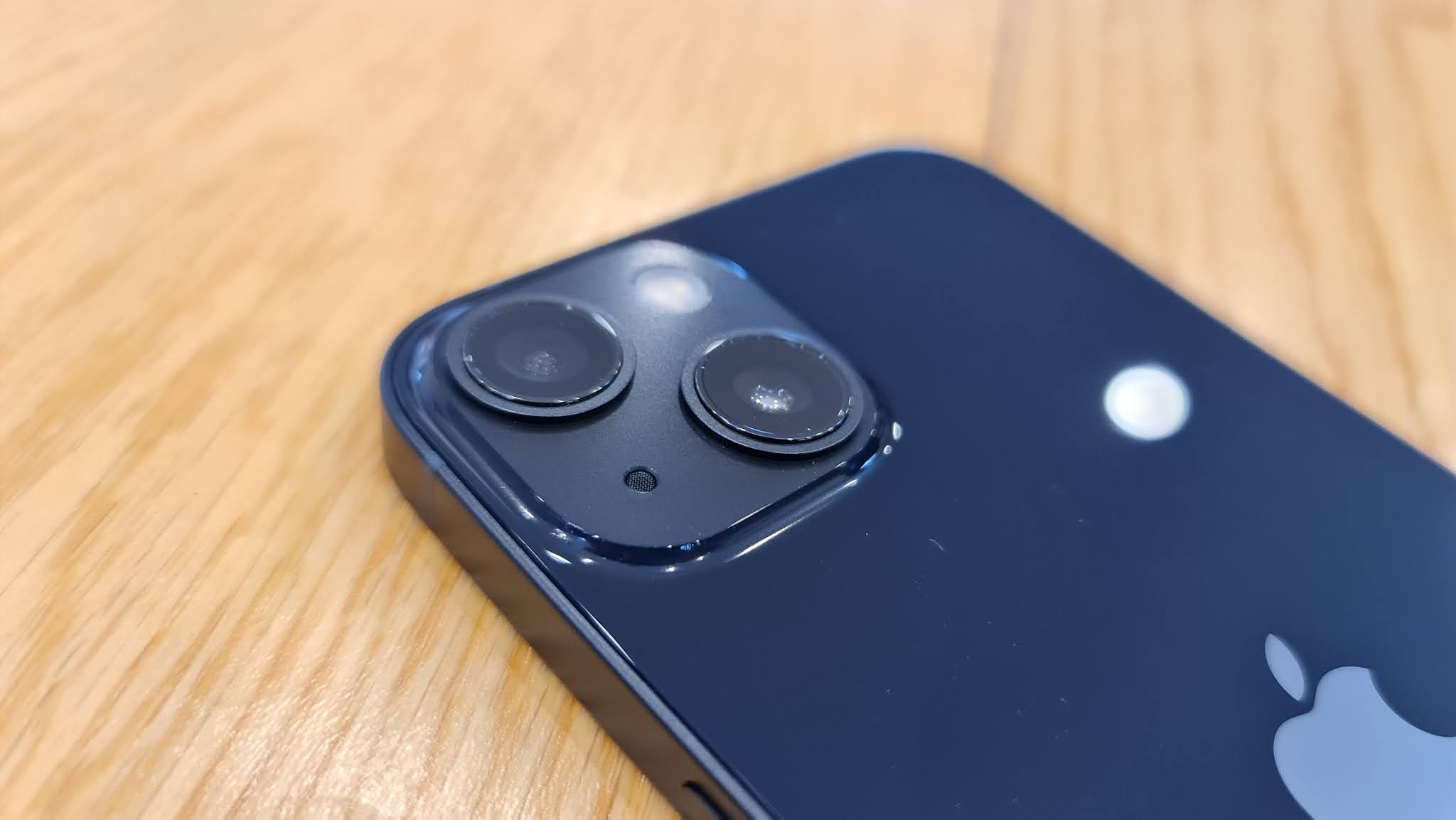
The iPhone 13 offers quite the range of colour choices; Starlight, Blue, Pink, (Product) Red - which is obviously the best colour for a phone ever - and yes, Midnight Black. Which is what I've been sent. Not that I'm bitter.

That was a joke of course - I'm far from bitter as this is a truly decent phone indeed - especially when it comes to its camera, something else I've found a little lacking in iPhones of the past. The rear-facing camera is a dual lens affair, a wide and ultra-wide, both larger sensors and this year arranged diagonally, just to mix things up a bit.

I can't lie; I miss having a telephoto lens on my phone camera but there are other things this phone can do besides just take cute pics of my puppy. For instance, the new Cinematic Mode does an incredibly intuitive job on focusing on the primary subject in your videos - and you can switch focus with a simple tap of the screen. Combined with Sensor-Shift Optical Image Stabilisation means it's actually rather easy to capture some very professional-looking footage with hardly any effort. The larger sensors provide improved low light performance, although you can't use Night Mode with portrait shots like you can on the Pro models.

Because of some of the other incredible photo and video features Apple has introduced to the iPhone 13 Pro and Pro Max, I was a little apprehensive when I first started using the cameras on this phone but I've honestly found the picture quality to be consistently great - point, shoot, boom.

The 12MP TrueDepth selfie cam is pretty standout too - it also boasts Cinematic Mode for those groovy, split-focus videos, as well as a similar range of filters, lighting effects and bokeh control. But perhaps most importantly - Face ID; the fastest and most reliable method I've used to unlock a phone. Although, it still frustrates me you can't unlock straight to your home screen; what's the point of that extra swipe up, exactly?

Oddly for any Apple device, when I first set up the iPhone 13, I encountered a minor glitch. Given masks have become a kind of compulsory fashion accessory these days, it was a major bonus when Apple gave users the ability to bypass Face ID to unlock their phones with their watches. With that setting enabled, as long as you're wearing your Apple Watch and it's unlocked, you can still get into your phone while masked up, without having to enter your pin.

Trouble is, on the iPhone 13, although that setting was still there, it didn't work. Every time I tried to toggle it on, I’d get a message claiming the phone couldn't connect with my watch - even though all my other apps and notifications were syncing perfectly. This drove me crazy for a while until some intensive Googling reassured me everyone else was having the same issue and it was likely an iOS update was on the way to sort it out.

I have to point out it's very unusual for any Apple gadget not to perform at 100% straight out of the box, no matter how new it is - the fact iPhones "just work" is a big reason people choose them. I guess the real test here is how quickly Apple can fix a little hassle like this.

The answer is, only a matter of days.

In fact, before the week was out, an update did indeed come through, specifically listing this glitch as one of the fixes included. Nice work, Apple.
 
I believe this is indicative of a recent attitude shift when it comes to iOS - and iOS 15 specifically. It's taken a long time for Apple to let go of its set-in-stone, like it or lump it, you'll use the device how we tell you to philosophy. It seems as though features like customiseable widgets, App Library and Control Center are an overdue acknowledgement that sometimes, other people have good ideas too and perhaps iPhone users should be allowed to access some of them.

So while we're on that... Can we have a rotating home screen next please? I hate shutting a landscape app only to have to rotate my phone back to portrait to do the next thing. If you can do it for iPad, you can do it on the phones, surely.

One reason I'm holding the iPhone 13 in landscape is to consume video content - and why not? The 6.1-inch Super Retina XDR display is brighter than ever, looks fantastically crisp and even the camera notch is slightly smaller than before. I love the confidence the Ceramic Shield glass offers too - two weeks down and not a scratch to be seen.

Again, with features like Ceramic Shield, IP68 water resistance, MagSafe accessories and wireless charging, you really have to do a deep dive to justify paying any more for the Pro or Pro Max versions of this phone. Accessories like the MagSafe leather wallet work just as well on this one - as with AirTags, you can use Find My to figure out where you last left your wallet, if it isn't currently attached to your phone. Genius.

So back to that upgrade question; how exactly is the iPhone 13 better than the 2020 or 2019 versions? I've mentioned the colours, display, camera, processor and battery... and let's not forget storage either. The base model starts at 128GB and now goes right up to 512GB.

If any of those things are pain points for you right now, it might be time to trade up after all. We haven't reached peak phone yet but this is definitely a step in the right direction.


Sunday, 12 September 2021

The Folder You Can Actually Afford

Of all the crazy gimmicks, tricks and addons various phone-makers have experimented with over the last couple of years, Samsung takes the prize for developing a revolutionary new concept and sticking with it.

If recent international sales figures are anything to go by, Samsung's gamble on foldables is really starting to pay off and in some markets, the new Galaxy Z Fold3 and Z Flip3 look like they're going to be even more popular than the S21 series of handsets from earlier in the year.

It seems, thanks to Samsung, the folding screen has really come of age, so let's find out why the Z Flip3 is suddenly so in-demand...


The obvious answer is price. 

The Galaxy Z Flip3 5G is a whopping $700 cheaper than last year's Flip, starting at $1599.00 for the 128GB model. It's not every day a tech giant produces something new, something better, then sells it for almost a third less than its predecessor. While this might be slightly shocking for those early-adopters who forked out so much more for the first Flip, it's great news for people considering a new flagship handset.

(By the way - if you're wondering what happened to the Galaxy Z Flip2 - there wasn't one. The original Flip wasn't 5G, then there was a 5G model, so technically, this is the third one)

This mid-$1000 range is where you'll find the top option from a lot of phone makers, although certain brands, including Samsung, have handsets priced well into the $2000's and beyond. The point is, at around $1700, you're competing with very powerful phones with excellent storage, great cameras and incredible displays.

As it turns out, the Z Flip3 is also a very powerful phone, with excellent storage, a better-than-okay camera and a display, obviously, that'll bend your brain. Not necessarily due to picture quality but because it actually bends. In half.

The general concept of the Flip3 is pretty much what we saw from the original - a clam-shell device that folds down to half the size of any other phone. The first Flip impressed with its durable hinge design - a big improvement on the more experimental-feeling Galaxy Fold that came before it. At the time I was surprised how much I enjoyed using it as my primary device - not just because it was so much fun to fold and unfold but for practical reasons too.

Suddenly, no pocket was too small to fit my phone. And Flex mode was basically a revolution in selfie-shooting; the ability to leave the phone half-folded to shoot photos or video without a tripod was quite simply, game-changing.

Well, that's all been enhanced.

The Galaxy Z Flip3 5G is powered by the Qualcomm Snapdragon 888 CPU - which is pretty much the best you'll find in an Android phone right now. Combined with 8GB of RAM, this is a device that never falters, performing all tasks quickly and smoothly, from downloading and installing apps, to browsing and messaging, to filming and photography.

You can opt for 128GB or 256GB of storage - the larger is only $100 more, which seems like good value to me, especially if shooting pics and movies is your thing.

Those pics and movies will look better than ever too - the 6.7-inch Infinity Flex internal display is now capable of a 120Hz refresh rate, automatically adapting to your requirements. Yes, there's still a detectable groove in the middle but get over it - it doesn't affect performance at all and you won't even notice it from most angles.

Perhaps the most obvious upgrade from the previous generation of Flip is the outer screen, now significantly larger than before. You can now scroll through your notifications, swipe left to peruse a number of specifically designed widgets (calendar, media player, voice recorder etc) and of course, there's a customisable clock-face, with several designs to choose from that you can even co-ordinate with the new Galaxy Watch4 range.

All this is dramatically more useful than the tiny window we had first time around and that's before you get to my favourite trick; the Cover Screen Preview. This is for when you want to use the primary, rear-facing camera array to shoot selfies. Simply press the Cover Screen Preview icon in the top right corner and you can now see your shot on the outer screen - with one small problem; the outer display is the opposite orientation to the inner one. This means your preview is pretty harshly cropped - but once you get used to that you can line up some great shots using all the extra power and features of the main camera to capture a more professional selfie.

Not that the front-facing 10MP does a bad job either. In fact, lately I've really come to appreciate how well designed the Samsung Galaxy camera app really is. So user-friendly with a fantastic range of shooting options and now there are even more effects and filters, all easily accessible to help make your pics more shareable than ever.

It's the rear-facing, dual 12MP main shooter that comes up a little short when compared to some of the other cameras on handsets in this price-range. For a start, it is only a two-sensor array - interesting in itself when most other flagships offer at least three if not four specialist lenses. You get wide, and ultra-wide angle options - and you can still take decent split-focus (bokeh) portrait shots. It's the lack of a decent zoom where things fall down a bit - not much you can do about it without a telephoto lens. Low light is another grey area (deliberate, brilliant pun) - although if you've got the time - and stability - to switch to Night mode, you'll be fine.

I'm not saying I was dissatisfied or frustrated by the camera performance - in fact, I've been more than happy with about 90% of the photos and vids I've shot with the Z Flip3 - just be aware if you choose this groovy, folding phone, you're not getting the absolute best camera available.

But it certainly is groovy. Cream. Phantom Black. Green. Lavender. Or order straight from Samsung.com and choose from White, Grey or Pink as well. I was sent a cream one and there was just something so retro about it. I can't quite say why, but damn it looks cool sitting all folded up on a table.

Most importantly, I hardly thought about durability the whole time I was using it. The hinge mechanism and screen technology has been beefed up to the point there's just no weird flex or instability at all. The outer halves are covered in Corning Gorilla Glass Victus - the toughest on the market - and it's IPX8 certified against a dunk in water too.

I'm not usually massively into accessories but I have to admit, the Z Flip3 has ushered in a range of cases that don't just look good, they feature practical addons like key-rings and interchangeable straps.

There are lot of reasons to buy this phone and I'm struggling to find many not to. Okay, sure the dual-lens rear shooter isn't perfect but I'm convinced that's a compromise most consumers would be prepared to make in favour of the totally unique form factor and inherent advantages like shooting in Flex mode. And to be honest, I can definitely do without the massive bump of a multi-lens camera module on the back of my phone.

Especially when it's folded neatly in half in my pocket.


Click here for more information and pricing on the Samsung Galaxy Z Flip3 5G.

Thursday, 15 April 2021

Mid-Range Price But Not Much Compromise

Well they've gone and done it again.

Mere months after launching its flagship Galaxy S21 series in a surprise mid-January attack on the opposition, Samsung is back with its A-Series of mid-rangers and as we've seen before, they're pretty damn good. In fact, after using one for a few weeks I'd have to say this year's crop are so good, there might be a few people out there who end up with buyer's remorse if they went early on one of those bright and shiny S21's...


The Samsung Galaxy A52 is pretty much slap-bang in the middle of Samsung's mid-tier offerings. Priced at just $599, the challenge here is to figure out which flagship features have been left off to make the handset so affordable.

There's a choice of four colours and they're all awesome apparently; Awesome Violet, Awesome Blue, Awesome Black an Awesome White. I had the violet one and yes, I can confirm, it was fairly awesome.

Unlike the top-of-the-line models which are all about glass and metal, there's definitely more of a plastic feel going on here but I don't mind it. In fact, the way the rear camera module is moulded seamlessly into the rest of the casing is much more comfortable to handle - especially when slipping the A52 in and out of your pocket. The back is smooth but not shiny, so doesn't show fingerprints. The phone is light and feels kind of flimsy but it isn't at all - in fact after more than a week of use and abuse, there are no marks or scratches to be found, even after one particularly spectacular flip off the arm of my sofa, ricocheting off the edge of a side table and clattering onto a hardwood floor. (I mean, you have to test these things out, right?)

If you're used to a massive screen, this might be just big enough. The A52 sports a 6.5-inch FHD+ Super AMOLED display and as is par for the course for most Samsung devices, the quality is literally brilliant. The combination of a small cutout for the selfie cam and a fast and reliable on-screen fingerprint sensor ensure good screen-to-body ratio although the display is flat, not curved at the edges so it's not quite the infinite viewing experience of it's pricier cousins.

The first thing I was struck by when using the A52 was how easy it was to use - powered by the Qualcomm Snapdragon 720G and 8GB of RAM, it positively sails along, running the exact same operating system as the big boys; Samsung One UI 3.1 on top of Android 11. That means you have access to the seemingly endless selection of tweaks and customistations my favourite OS has to offer, from system fonts to a home screen that actually rotates to landscape when you're holding the phone sideways.

The next thing that blew me away was the excellent camera quality - especially for close-up and portrait shooting - not so much for long-distance and zoom shots although ultra-wide does a pretty nice job. As you can see, there's a full quad-cam array on the back and I was surprised how quickly the camera app responded - very fast to focus. Night mode is definitely the way to go for low light shooting - the shutter speed isn't restrictively slow and the results are so much clearer. There's also a new "Fun" mode - featuring a constantly updating selection of filters to streamline your social media uploads.

Because I review a wide variety of phones, I often feel a little hamstrung when dealing with devices in this price range but that just wasn't the case with the A52 - the only feature I genuinely missed was wireless charging. It has decent battery life anyway and I never came close to running out of juice, even at the end of the longest of days when it might be almost twenty hours between plug-ins.

For all intents and purposes it runs like a flagship does; smooth, reliable and no hiccups at all. It's even IP67 certified against dust and water - many far pricier phones fail to include that.

You also get 128GB of internal storage with the option of microSD expansion. This isn't even an option on the S21's and neither is the headphone jack. I don't really care about headphone jacks but then I have a cupboard full of bluetooth earbuds and headphones. As it happens, I was staying at my father-in-law's place recently and he doesn't have smart speakers, so the only way to play music from my phone (you know, something not Rod Stewart) was to plug directly into the sound system. Luckily, I was using the A52 at the time so was able to give Rod the flick.

Even if you don't have something to connect to, the A52 also boasts Dolby Atmos-capable stereo speakers. Honestly, it's really hard to come up with something this handset won't do. Very impressive for the price.

And the violet really is awesome.


Click here for more information and pricing on the Samsung Galaxy A52.